The Role of Leadership in Diplomacy: Guiding Warring Factions Toward Conflict Resolution
Introduction
Diplomacy, the art of conducting negotiations between states or international actors, plays a pivotal role in global affairs. Conflict, whether it arises from territorial disputes, ethnic tensions, or ideological differences, has been a recurring feature of human history. Leaders are essential in guiding warring factions toward peace, transforming conflict into cooperation. One of the most critical aspects of diplomacy is the role of leadership in guiding warring factions to the negotiation table and in developing and maintaining stabilization and reconstruction activities in post-conflict scenarios. The role of diplomats in managing interstate conflicts is indispensable in today’s increasingly complex and interconnected world. At its core, diplomacy aims to prevent and resolve conflicts, maintain peace, and facilitate international cooperation. This paper delves into the multifaceted role of leadership in diplomacy, focusing on how international leaders work to guide warring factions toward conflict resolution.
Leadership in Diplomacy: A Historical Perspective
Leadership within the context of diplomacy is a dynamic and multifaceted concept. Guiding warring factions toward peace has always been a testament to effective leadership. As a tool for resolving conflicts, diplomacy has evolved over time from a predominantly secretive and elite activity to a more transparent, collaborative, and inclusive process. Throughout history, leaders have played crucial roles in shaping diplomatic efforts.
Examples:
– Henry Kissinger: Played a key role in U.S. foreign policy during the Cold War, using realpolitik to prioritize national interests.
– Nelson Mandela: Instrumental in ending apartheid in South Africa, demonstrating transformative leadership.
– Kofi Annan: Emphasized the importance of international organizations as UN Secretary-General.
Leadership in Diplomacy: Case Studies
To illustrate the role of leadership in guiding warring factions toward conflict resolution, consider the following:
The Camp David Accords: U.S. President Jimmy Carter’s leadership between Egypt and Israel resulted in a historic peace agreement.
The Dayton Peace Accord: U.S. diplomat Richard Holbrooke brokered peace in Bosnia, 1995.
The Iran Nuclear Deal (JCPOA): EU diplomat Federica Mogherini played a key role in guiding warring factions toward peace through negotiations between Iran and the P5+1.
The Colombian Peace Process: Colombian President Juan Manuel Santos facilitated peace with FARC, ending decades of conflict.
The Role of Diplomatic Leaders in Conflict Resolution
Diplomatic leaders guide warring factions toward negotiation and resolution. Guiding warring factions toward peace is both an art and a science. Their role requires:
- Navigating complex international relations
- Facilitating communication and negotiation
- Finding common ground
This requires impartial negotiation skills, cultural sensitivity, and knowledge of international law. Successful diplomats act as agents of peace, guiding warring factions through the challenges of negotiation, and shaping post-conflict recovery.
Preventative Diplomacy
Preventive diplomacy addresses potential sources of conflict before escalation. It includes early intervention, advocacy for peaceful solutions, crisis management, and prevention of spillover effects.
Strategies:
Multilateral Diplomacy: Collaboration through international organizations to avert hostilities and guide warring factions toward peace, e.g., JCPOA negotiations with P5+1.
Multitrack Tier II Diplomacy: Engaging non-governmental actors to achieve sustainable solutions, e.g., Pugwash Conferences during the Cold War.
The Challenge of Diplomatic Leadership in Conflict Resolution
Diplomatic leadership is complex, requiring:
- Building relationships
- Fostering trust
- Creative problem-solving
- Patience and perseverance
Communication Challenges
Effective communication is critical to conflict resolution. Conflicts are often rooted in economic, ideological, racial, political, or religious factors. Poor communication can derail negotiations. Diplomatic leaders must manage emotional impulses.
Communication Strategies:
- I have something I would like to discuss with you that I think will help us work together more effectively.
- I would like to talk about ______with you, but first I would like to get your point of view.
- I need your help with what just happened. Do you have a few minutes to talk?
- I need your help with something. Can we talk about it soon?
- You may be right, but I would like to understand more.
- I have a completely different perspective, but clearly you think this is unfair, so how can we fix this?
- I would like to give my reaction to what you have said so far and see what you think.
- This may be more my perception than yours, but when you said _____, I felt ________.
- Is there anything I can say or do that might convince you to consider other options here?
- I am sensing there are some intense emotions about this. When you said “X”, I had the impression you were feeling “Y”. If so, I would like to understand what upset you. Is there something I have said or done?
- I would love to hear your reaction to what I just said ___________
- I came to this conclusion _______________ because _________
- My perspective is based on the following assumptions __________
- Here is what I am doing____________
- Do you see the situation differently ________?
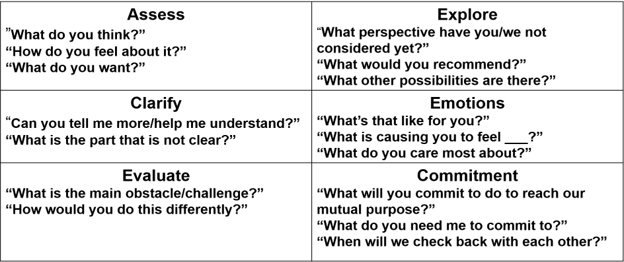
Reduced diplomatic tensions and frustrations regarding the negotiation process with disputants can be avoided by reframing problems, putting the situation into perspective, and letting go of historical grievances. The second communication strategy provides a systematic approach to diplomatic negotiations in conflict resolution and strengthens communication pathways by providing a structured and empathetic process that encourages understanding, trust, and collaboration among the parties involved. This, in turn, promotes effective communication, which is essential for reaching peaceful and lasting solutions to conflicts. By following these steps, diplomats can create an environment where productive dialogue is possible, leading to more successful conflict resolution efforts.
Trust and Credibility
Trust and Credibility are the cornerstones of conflict prevention and resolution. Diplomats often find themselves in the role of mediators, facing the formidable challenge of fostering trust among warring factions. In long-standing conflicts, a legacy of mistrust can linger, making it challenging for these factions to believe in the sincerity of agreements aimed at resolving their disputes. Consequently, the task of convincing all parties that the negotiation process is fair and unbiased, with the potential for a just resolution, becomes a monumental endeavor. This is where the art of diplomacy and leadership skills come into play, as they are instrumental in persuading key stakeholders that embracing open and transparent dialogue can create an environment of trust and credibility, conducive to direct talks, shuttle diplomacy, and discreet backchannel negotiations. Without trust, making meaningful progress toward finding a mutually agreed solution to contested issues becomes an uphill battle.
Conclusion
Conflicts frequently entail multiple stakeholders with diverse interests and goals. Mitigating the underlying causes, fostering dialogue, and encouraging collaboration among various community leaders can serve as a means to preclude conflicts from spiraling into violence. Diplomatic leaders must adeptly navigate this array of agendas to uncover common ground. Skillfully managing these conflicting interests, ensuring that all parties feel heard and understood, and addressing their concerns present a formidable challenge. Conflict resolution often entails grappling with intricate issues like territorial disputes, resource allocation, and historical grievances. Grasping the intricacies of these matters and devising equitable solutions that satisfy all parties is an arduous task. The ever-present risk of violence and escalation in conflict scenarios demands that diplomatic leaders labor to de-escalate tensions and prevent outbreaks of violence while sustaining a precarious peace throughout negotiations. Conflict prevention and resolution is a crucial aspect of diplomatic missions during times of interstate conflict, and the role of sound leadership is vital.